
ADD ADHD Addessories

ADDessories, accessories for ADD ADHD

ADHD Coping Mechanisms Blaming Yourself or Them

Written by ADDer 7 Comments

adhd-coping-mechanism-study-school-graphic One of the things that I have consistently found most fascinating since discovering my ADD and the science of ADHD in general, is the concept of coping mechanisms.

All human beings, whether they have attention deficit disorder or not, develop over the course of their lifetime, a set of skills (for lack of a better term) that allows them to get by in life. These skills range from the most basic, like tying your shoe, to much more complicated ones, like initiating and developing a romantic relationship with another person. Coping mechanisms are a specific subset of these life skills. A coping mechanism is a skill or habit that develops in order to compensate for something, whether it is a some sort of shortcoming, some form of emotional discomfort, or simply to take the edge off of life’s many potential disappointments. One common coping mechanism is emotional eating, where a person eats either certain foods, or large amounts of food, in an effort to make themselves feel better.

Common ADD Coping Mechanisms

For adults with ADHD, recognizing and understanding coping mechanisms is an important component of non-medication attention deficit hyperactivity disorder treatment. True coping mechanisms are mental or behavioral in nature, as opposed to functional. In other words, the constant adjustments and refinements we make everyday are not coping mechanism. The habits, skills, and emotional responses we develop over long periods of time are coping mechanisms.

For example, always placing your keys in the same place is a method of doing something, not necessarily a coping mechanism. That is simply an attempt at perfecting the flow of your current lifestyle.  However, being someone who is always compulsive about keeping everything in its assigned location, is a coping mechanism.

Like everyone, people with ADHD have good coping mechanisms, and bad coping mechanisms. Recognizing the good ones provides a starting point for developing new coping techniques or expanding upon already useful coping methods. Recognizing the negative coping mechanisms provides a starting point for lifestyle adjustments that hopefully, lead to the eventual disappearance of said habit. Detecting and adjusting the mental attitude that often accompanies negative coping responses is also a good place to start when it comes to therapy or ADHD coaching.

Blaming Yourself For ADHD or Blame Others?

One of the most intriguing things about common ADHD coping mechanisms is how they may or may not apply to any one person. Even more interesting is how the same mechanism can be flipped upside in some people that have ADHD.

One of the very common coping mechanisms for adults with ADHD is to blame supposed character or personality flaws for certain things. For example, a woman with ADD who can’t seem to do any job beyond answering phones because she is never organized enough for anything more advanced, may eventually take the edge off of such disappointments by laughingly noting that she is, “just a space cadet sometimes.” Unfortunately, this all too common side effect of ADHD, is not only surprisingly effective at blunting the hurt of disappointment, but also at making one resigned to never striving for anything else.

Reading about this coping method, or its variations, in book after book left me skipping chapters and writing off certain advice, because it never really seemed to apply to me. I’ve always been very confident in my abilities, often getting jobs, projects, and responsibilities beyond my current skill level. Fortunately, I’m also quick to learn when either the interest or immediately looming threat of disaster is strong enough. But, I thought, I’ve never really blamed myself.

Ironically, it turns out that I use the blame coping mechanism just as much (or more) than most people with ADHD, the only difference is that I blame other people.

Many ADHD books, including the oft mentioned, Hallowell books, Driven To Distraction and Delivered From Distraction are written by successful individuals who claim to have ADD themselves. In one of the books, Hallowell, who is a successful doctor, describes his thriving medical practice and his extensive work with ADD patients before saying that he, himself, also suffers from ADHD.

As I read that passage soon after being diagnosed with adult ADHD, I couldn’t help rolling my eyes. Hallowell, I figured, was lying in order to boost his credibility in the area of ADD. After all, I thought, he went to medical school, graduated, became a doctor and developed a successful medical practice, just how bad could his ADHD be? Oh, my gosh! Did he have to use sticky notes to keep track of assignments? Oh, the horror!

The truth is, that I despised Hallowell and his success as a doctor and subsequently an author. The reason is that instead of blaming myself, I blame others. When Hallowell, and his “I barely have ADD” colleagues go out and build these big, successful careers, fat bank accounts, and speaking tours, I reasoned, it hurts those of us who REALLY have ADHD.

I’ve thought that way my whole life.

“I’m the smart one. The only reason he is doing better in school is because he studies EVERY NIGHT.”

“I could have started up an Internet business, but I didn’t want to spend every single day working in my basement.”

The tragedy is that until recognizing what I was doing, I took much of it as a badge of honor.

I graduated from High School near the top of my class. I got all A’s except in English where I got B’s. I could have gotten A’s in English, but I never did homework. Literally, NEVER. I did my schoolwork during the class before the class it was due in. So, I did my Algebra homework for second period during my History class at first period. The one thing I couldn’t quite get done like that were long essays. So, every time an English paper was due, I would start it during the class before it was due, but I wouldn’t finish it. I’d have to wrap it up the next day. It was still an A paper, but with the one letter grade penalty for being late, it became a B.

I was proud of that as I left high school. You see, grades or no grades, I was faster, smarter, and better than everyone else. Those kids who left with a 4.0 where the chumps, not me. They were the ones who wasted their free time actually doing homework.

Unfortunately, not recognizing the truth cost me a lot in college where I not only continued the same pattern, but actually expanded it. In high school, attendance was required. Between parents, teachers, and administrators, the path of least resistance was going to class. Coming up with an excuse, sneaking out the door, and then trying to keep my parents from getting a phone call or note about my absence was way more work than just going to classes, so I went.

At college, that was no longer the case. In college, no one called my parents, most professors didn’t know whether you were there or not. The path of least resistance became not going to classes, and I didn’t go. My new pattern became:

  1. Go to class one or two times and get syllabus.
  2. Use syllabus to find exam dates and due dates of essays or projects.
  3. Stop going to class.
  4. Go to the class the day before the exam to get review sheets and any changes about what would be covered.
  5. Hurriedly read through the textbook chapters that would be on the exam.
  6. Take test.
  7. Surf the curve to a B or C.
  8. Start any essay or project the night before it was due. Work on it until it was “good enough.” Surf curve to C.

During my Junior year, I literally attended my Geography class 5 times the entire semester. I got an A.

The only exceptions were the classes where the professor actually took attendance and docked your grade if you missed classes. In every one of those classes, I got an A, because I actually went. Ironically, I seldom paid much attention while I was in the class. I read the student newspaper, worked on other classes’ homework, or just daydreamed. But, looking up at the board and hearing a paragraph here and there was enough to let some of the information sink in. More importantly, it was enough to give me an idea of what the professor felt was important.

For years after graduating, I proudly told anyone who asked that I graduated with a 2.14 GPA, but, I added, I never really went to class or did any of homework. I don’t know if anyone was ever impressed by that. Not that it matters.

The true tragedy is that I didn’t do anything else. There would be some redeeming value in how I spent my 4 years on campus if I had gotten in a 100 day ski season, or spent sunny days hiking, biking, or doing ANYTHING. Instead, I mostly slept in, napped, and messed around on my computer. The only good to come out of it was that in those days, the Internet was a text based Unix system. There were no web browsers, just FTP, vi editor, GREP, UUENCODE, and so on. In the end, I knew a lot about how to use computers, which meant I didn’t have to figure out how to get a job in Chemistry with no professor recommendation (none of them would have recognized me), no summer lab work, and no internships. Instead, I got a job as a computer administrator and quickly became certified in numerous technologies just as the technology bubble started ramping up.

Of course, the blaming cope strategy didn’t go away. I always felt that I should be the project manager or the startup millionaire or whatever, but I never was. The reason was simple, I could have been, but they just worked harder, tried harder, or refused to give up. Not me. Those suckers.

*******************

These days, I try not to blame others for their success, nor assume that I would be twice as successful under the “slightly different” circumstances of me actually busting my butt to make something happen. But, like most attitudes developed over decades, it can be hard to keep up, and even harder to see when it is happening.

Filed Under: ADHD Tagged With: ADD, ADD Books, ADD/ADHD, ADHD Diagnosis, attention deficit disorder, Treatment

ADHD Women Affected Differently? ADD Media Story Suggests Women's Symptoms Different Than Men's

Written by ADDer Leave a Comment

adhd-different-women-symptoms-msn-article-graphic Haven’t really had a chance to dive into it yet, but a front page story on MSN today displays the title "ADHD Affects Women Differently: What to Look For and How to Fix It" We’ll talk about everything that is wrong with that title later. (Often, in journalism, an editor writes the titles based on a cursory review of the article instead of the author.)

Do women have different ADHD symptoms than men do? It isn’t an unrealistic question. However, based on my quick scan of the first page, the author of this article may be barking up the wrong tree. It seems that the contention here will be that since women aren’t as likely as men to have hyperactivity as a trait of their ADD, their symptoms are therefore different than the ADHD symptoms that men have.

There are actually several types of ADD-ADHD. The three primary classifications are:

  1. ADHD with Hyperactivity (This is considered the "standard" ADD by the uninformed.)
  2. Passive Type ADHD (ADD without Hyperactivity, among other things.)
  3. Hybrid ADHD (A combination of the two types of ADD above.)

I don’t want to judge something until I’ve had time to fully read it and digest exactly what the text says, but on first glance, it appears that this article heads down the path to declaring that Women’s ADHD is different, when in fact, the type of ADD symptoms described as being most common in women are really nothing more than the clearly defined Passive ADD.

The other element of the article looks to be about how Passive ADHD (or "women’s ADHD) may be missed more often because of the missing hyperactivity symptom. This, unfortunately, is 100% accurate. I have the passive type (I’m also happen to be male) of ADD and mine went undiagnosed for years. Not only was it never picked up on during the childhood or school years, but it took over a year after seeking help as an adult during which time I was given medications for both depression and anxiety (neither of which did much of anything for me.) So, at least that information may be helpful for the public at large.

If you are interested in reading the MSN ADHD Affecting Women Different article, it is linked up there at the top of the article.

Technorati Tags: ADHD,ADD,Womens Health,Mental Health,Attention Deficit Disorder

Filed Under: ADHD News Tagged With: ADD, ADD News, ADD Women, ADHD, ADHD Media, ADHD News, ADHD Women

ADHD Depressing State of Affairs for Attention Deficit Disorder Awareness

Written by ADDer Leave a Comment

Over at Google, they have some new(er) features on their search engine that were rolled out this year. Some of them, like the Limit Search to Past Year feature and limiting search results to specific date range, I’ve been using since the day they came out. Others, like the different search "Views" (Related Searched, Wonder Wheel, Timeline) and the ability to add More shopping sites, or list Fewer shopping sites, have gone mostly unnoticed and unused by me.

This morning, however, I was playing around with some of these new Google search options. (Kudos, to Google, by the way, for carefully choosing the way the offer these additional features. Instead of calling them "advanced" or something like that, they are simply called "more options." That makes them much more likely to be checked out and used by non-techie search engine users.) One of the particularly interesting "More Options" that Google now has is the Wonder Wheel.

Google Wonder Wheel, Related Searches, and Suggested Searches

The Wonder Wheel is basically a visual representation of the Related Searches function, which is sort of an extension of the Suggested Searches that has been a feature on the main Google search page for some time now. As you type in your search, the search program tries to guess what it is you might be searching for based on the words you have already entered. This not only saves some potential typing, but it also generates phrases and keywords that are more likely to lead to successful search engine results instead of those far corners of the Internet where ad-filled junk pages await to ambush visitors.

For example, if you are wondering about the latest ADHD medications, you might go to Google.com intending to type in add drugs or something similar. However, as you type in the words, suggestions appear below the search box. Sometimes, this is very helpful, and sometimes not, depending upon what exactly you are searching for. In this case, it is likely to be very useful provided you were looking for something more specific than you intended to type.

google-suggested-search-function Notice that most of the suggested terms are actually for adhd and not add. This is because:

  • a) the official name is actually ADHD (Attention Deficit Hyperactivity Disorder) and
  • b) "add" can actually have a lot of meanings (addition, acronyms, etc…)

Furthermore, if you were looking for specific information, such as updates about the side effects of ADHD medications, the suggestion will get you to the data you were looking for faster, because you won’t have to sort through all of the webpages that, while about ADD drugs, are not necessarily about their potential side effects.

The Wonder Wheel takes off on this concept by not just showing you longer phrases that might be what you are looking for based upon being an exact match for what you have already typed in, plus additional words or letters, but by displaying related searches that might be more relevant to what you are looking for. Or, more importantly for doing in-depth research or analysis, related topics or searches that might have valuable information about what you are really looking for. This avoids the problem caused when you are searching based on what makes sense to you, but might not match up quite right with the information you are looking for.

Use Google Wonder Wheel to Find More Related Information

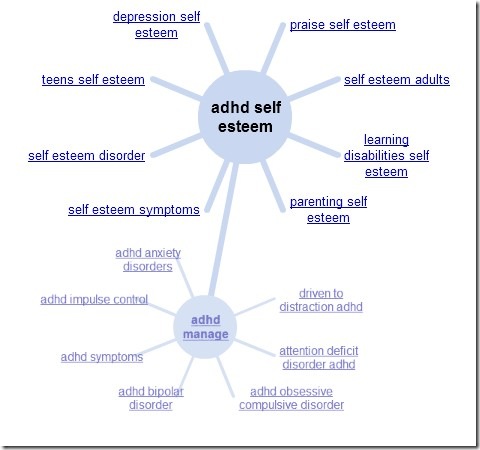
When you type a search term into Google and then select More Options –> Wonder Wheel, what you get is a graphical view of other search phrases that might be related to what you are searching for. This image is essentially a "wheel" composed of your original search as the hub, with "spokes" going out to each related search. Depending upon the initial search, there can be a lot of spokes, or just a few.

The best part is that each related spoke can also be clicked on. When you click on one of the related spoke links, the wheel moves with the related topic you clicked on becoming the center of the main wheel and the original wheel and spokes dropping into a secondary place. You can keep repeating this process to get closer and closer to the data you want.

If you start going in the wrong direction you can click on previous wheels. Although only the immediately preceding wheel and spokes are visible, previous hubs are represented by a series of disappearing circles. Each of these circles can be clicked to bring back up that wheel. So, if you know you want to go back three wheels, you can just click the 3rd circle. If you aren’t sure which one you want, hovering the mouse over a circle pops up the name of the search in the center of the hub.

It works remarkably well for numerous topics. It is especially useful for topics you don’t know much about. For example, if you want to search for a Christmas toy for a youngster and you know they want something like a robot hamster, you can search for robot hamster toy, and then use the wheels until you get to the specific Zsu Zsu Hamster thing that is Hot Toy for Christmas 2009. (No, I don’t get it either.)

However, using it to look at topics related to ADHD-ADD is depressing. Results showing "related" searches linked to some of the more unfortunate mental illnesses can lead people with little ADD experience into making some unfounded conclusions about their relationship to ADHD. Even worse, is that no matter how many links on the Wonder Wheel you click, ADHD solutions never appear. There are no links displayed that go to ADHD organization tricks or to ADHD tips for time management or even an ADD exercises. You can’t even get to the ubiquitous ADD Coaching that is so promoted within the community. Instead, you can go off and find out about bipolar disorder. Sigh.

adhd-information-reliable-search-graphic I think that this one seems pretty reasonable. Certainly these would be the most likely concerns of such searches.
*

bad-adhd-information-search-results

This one is unfortunate. Looking for tips to manage ADHD? Well, instead, how about suggestions linking ADHD to bipolar disorder and OCD? Maybe, boosting the ADDer’s
self-esteem would be helpful? Hmm…I don’t think those suggestions are making me feel any better.

It isn’t anything to get bent out of shape about, and I know that the nature of Internet searching is that Google search rankings are necessarily geared toward the lowest common denominator of knowledge, but it would be nice to see such a powerful tool at least be able to point toward one or two "positive" websites about ADHD.

Maybe as awareness grows and the fad-ishness of ADD continues to fade, there will be less demand for all things alarmist and conspiracy, and more demand for the answers to ADHD’s challenges. Until then, keep coming back here, or grab the Addessories RSS Feed to have the latest updates come directly to you.

*

Technorati Tags: ADHD,ADD,ADHD-ADD,ADHD News,ADHD Current Events,ADHD Treatments

*

Filed Under: ADHD News Tagged With: ADD, ADHD, adhd internet, ADHD News, adhd research, adhd tools

New Article About What Is ADD

Written by ADDer 2 Comments

I am always curious about new ADHD tips or developments in ADD research or treatments, but I’m also interested in the ever changing perception of ADD-ADHD in the public consciousnesses.

For a while there it seemed as though everyone without any personal or professional experience with ADD-ADHD and its affects thought that is was something phony made up by shrinks to explain away bad behavior by children.

Then, for a while it seemed like EVERYBODY had ADD, or thought they did. That finally seemed to culminate when Britney Spears went crazy and shaved off her hair, then proclaimed that sometimes she was like a kid with ADD even though I’d be she could barely even spell ADD.

The public fascination with ADHD seems to have calmed down as of late. I see far fewer articles in the newspaper and even fewer stories on T.V.  This is good news for the ADHD-ADD community. The less surface-level attention ADD gets, the better.

To test my theory a little bit, and because I know the topic well enough to write about it very quickly, I recently published an article about what is ADHD on another website. For those of you who aren’t familiar with it, HubPages is what is known as an article directory, or more derisively as a content mill. In a nutshell, it is a website that allows anyone to sign up for an account and then write articles about whatever they want and publish them on the Internet from the HubPages.com website.

There are several reasons someone would want to do such a thing ranging from pure vanity, all the way through to the purely mercenary function of creating more links to other webpages or websites for the purpose of building up Google reputation, or PageRank, in order to get higher search engine rankings for certain terms.

Anyway, I have an account over there that I started for the mercenary reason, and then sort of evolved into a good place to publish the tons of things I write for which I have no home. Sometimes, the articles are not about the kind of topics that people are willing to pay for and they also don’t fit into the themes or categories of other websites or blogs that I own. (For example, no one reading this blog, which is focused on ADD-ADHD information, would be charmed by an article about Arabian Horse that I posted here just because I didn’t really have anywhere else to put it.)

Thus, HubPages has become my sort of catch-all for any and all articles that I want to put up on the Internet, but otherwise am not willing to find a more traditional publishing location for.

The article I wrote was called simply What Is ADD?

I didn’t put any real effort into linking it or pushing it up in the search engines, although I did do the standard social bookmarking thing to make sure it got index properly in Google and Bing and the other search engines. But, for the most part, I was just curious if ADHD was a hot enough topic these days to drive the curious onlookers from the HubPages community to this particular hub.

So far, the answer would appear to be, that ADD is not a hot topic these days. As I’ve said before, I’m fine with that. I plan to leave it published there as a sort of canary in the coalmine. If all of the sudden, it starts to get lots of traffic, I’ll see it and we’ll know that another wave of looky-loos is coming.

Filed Under: News Tagged With: ADD, add articles, ADD/ADHD, ADHD, adhd articles, attention deficit disorder

  • « Previous Page
  • 1
  • …
  • 12
  • 13
  • 14
  • 15
  • 16
  • Next Page »

Welcome

Welcome to Addessories, your source for all things ADHD / ADD. Coming soon will be our products and accessories for adults and kids with attention deficit disorder. For now, you've found the best source for non-repetitive, non-conventional, non-standard, ADHD/ADD advice, tips, tricks, and tactics on the net.

Ads displayed on this site are not reviewed by, nor endorsed by ADDessories. Check your facts, do your research.

Best ADD-ADHD Info

ADD Planner

Vyvanse Review

Non-Prescription ADD-ADHD Treatments

Vyvanse Side Effects

Credit Karma Review

Other Info


Credit Check Total Scam

Wealthfront Reviews

Credit Karma Scam

Acorns Reviews

Digit Reviews

Latest on Addessories

  • ADHD Negative Talk – Beating Yourself Up Isn’t Helping
  • ADHD Diagnosis
  • Unseen Shiny Things
  • Is ADHD a Superpower?
  • ADHD Tips – Bookmark Day
  • Watching Training Videos with ADHD
  • Best ADD Tip Ever – The Only ADHD Advice You Need *

ADD Categories

  • ADD Books
  • ADD Humor ADHD
  • ADD Medication
  • ADD Organization Tips
  • ADD Tools
  • ADHD
  • ADHD News
  • ADHD Research Studies
  • ADHD Tips
  • ADHD Traits
  • ADHD-ADD Tips
  • News

Pages

  • About
  • ADHD – Basics
    • ADHD Prescription Medication List
  • ADHD Insurance Coverage FAQ
  • ADHD Tools Accessories for Life or ADDessories
  • How To Tell If You Have ADD ADHD
  • Prescription Information Sheets Side Effect Warnings In Plain English
  • Sitemap

Blogroll

  • Attention Deficit Disorder
  • Finance Education Encyclopedia
  • Mayo Clinic ADD Page

Top ADD Skills

Best ADHD Tips

Top ADD Organization Tips

© 2026 · Finance Gourmet by ArcticLlama, LLC